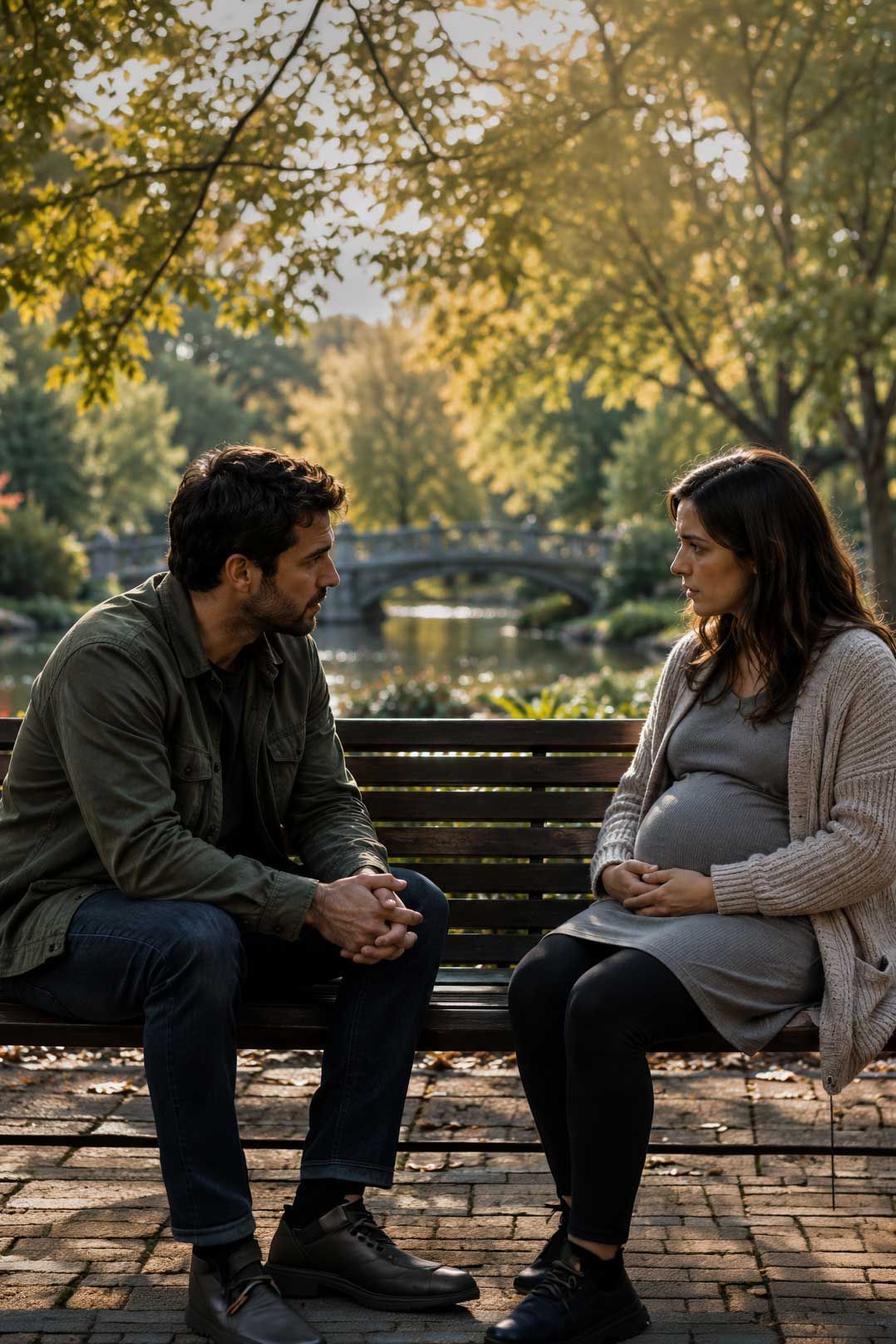
Has Feminism Gone Too Far? Is Toxic Femininity the New Toxic Masculinity?
When Did Equality Become A Competition?
There was a time when the message behind feminism seemed relatively straightforward.
Women wanted equal opportunities, equal rights, equal pay for equal work and the freedom to make their own decisions about their lives.
Fair enough, too.
For generations, women faced restrictions and expectations that men simply didn't have to deal with. Their career opportunities were limited, financial independence was harder to achieve and society had some fairly rigid ideas about what a woman should and shouldn't do.
We've come an enormous distance since then.
Australian women today have opportunities their grandmothers could only have imagined. They can pursue careers, run businesses, own property, choose whether to marry, decide whether to have children and generally build lives around their own priorities.
Of course, that doesn't mean every inequality has disappeared. Far from it.
But somewhere along the way, parts of the conversation about equality seem to have changed. Instead of discussing how men and women can enjoy equal opportunities and mutual respect, we're increasingly exposed to conversations about which gender is better, which has suffered more and which should be held responsible for everything that's wrong.
Social media certainly hasn't helped.
And it raises a question that I'm sure won't be particularly popular in some circles.
Has feminism gone too far, or have some people simply turned equality into a competition that nobody can win?
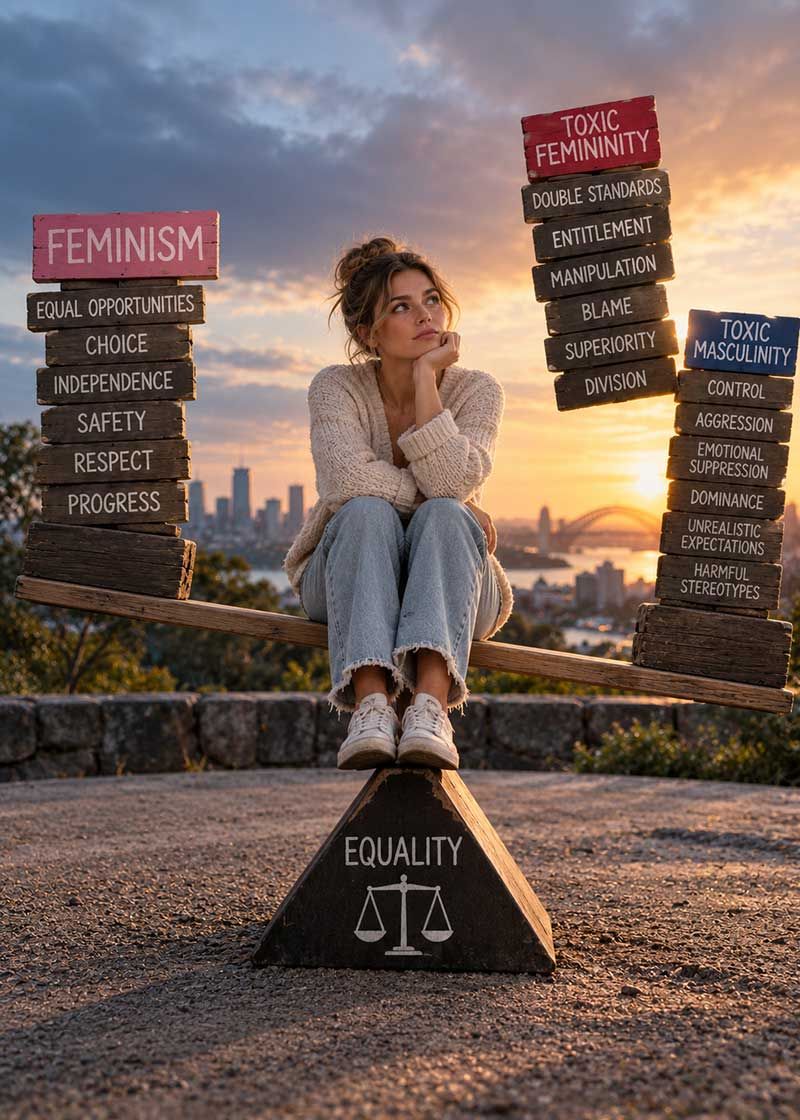
Let's Remember What Feminism Actually Achieved
Before we start questioning modern feminism, it's worth remembering why the movement existed in the first place.
Women didn't always enjoy the rights and freedoms many Australians now take for granted.
Employment opportunities were restricted. Workplace discrimination was common. Financial independence was often difficult, particularly for married women. Domestic violence was frequently treated as a private matter rather than a serious social problem.
Feminism helped challenge those attitudes.
It contributed to enormous changes in education, employment, financial independence, legal protections and society's expectations of women. These achievements matter.
And there are still important issues to address, including violence against women, workplace discrimination and the unequal distribution of unpaid caring responsibilities. None of that should be dismissed.
But recognising the achievements of a movement doesn't mean we have to agree with every opinion expressed in its name.
Surely genuine progress should be open to discussion. If we can question the behaviour and attitudes associated with masculinity, why shouldn't we be able to question those associated with femininity?
When Did Empowerment Start Looking Like Superiority?
One of the most positive messages to emerge from feminism is that women don't need to depend on men to build successful, fulfilling lives. That's a good thing.
Women should have the freedom to pursue careers, establish financial independence and make decisions without needing permission or approval from a male partner.
But there's a difference between independence and superiority.
Scroll through social media and you'll occasionally encounter a rather different version of empowerment.
- Men are useless.
- Men are emotionally incapable.
- Men are unnecessary.
- Women are better off without them.
Now, some of this is clearly intended as humour. Some comes from genuine frustration or painful personal experiences. But imagine reversing those statements.
Imagine a man publicly announcing that women are useless, emotionally incapable or unnecessary.
The reaction would probably be rather different.
And rightly so, because making sweeping negative statements about an entire gender isn't particularly helpful.
So why should it become acceptable when the genders are reversed?
Surely empowerment should mean recognising your own worth without needing to diminish someone else's.
When did celebrating women require putting men down?
Toxic Femininity: What Are We Actually Talking About?
We've spent years discussing toxic masculinity.
The term is generally used to describe harmful expectations associated with masculinity, such as the belief that men must always be dominant, aggressive, emotionally detached or unwilling to show vulnerability.
Importantly, toxic masculinity doesn't mean masculinity itself is toxic. It describes behaviours and expectations that can harm both men and women.
So what about toxic femininity?
It's a less clearly defined term, and people use it in different ways.
For this discussion, I'm talking about harmful attitudes or behaviours associated with expectations of femininity, particularly when gender becomes an excuse for entitlement, manipulation, double standards or avoiding accountability.
For example:
- Expecting emotional support while ridiculing a man who expresses vulnerability.
- Demanding equal treatment while insisting on special treatment whenever it's convenient.
- Using emotional pressure to control a relationship.
- Or assuming that because a woman feels wronged, the man involved must automatically be responsible.
None of these behaviours is exclusive to women. Men can be manipulative, entitled and controlling too. That's precisely the point.
If a behaviour is unacceptable, surely it should remain unacceptable regardless of who is doing it.
Is Toxic Femininity Becoming The New Toxic Masculinity?
This is where the conversation gets uncomfortable.
We've become increasingly willing to identify and challenge harmful male behaviour.
Controlling relationships, emotional manipulation, intimidation and rigid expectations around masculinity are all legitimate subjects of discussion. And they should be.
But are we always as comfortable discussing similar behaviour when it comes from women? Consider a relationship where one partner constantly monitors the other's phone, questions their friendships or attempts to control who they spend time with.
Most people would recognise that behaviour as concerning when a man does it. Would we respond with the same seriousness if the controlling partner were a woman?
Or consider emotional vulnerability.
Men are frequently encouraged to open up, express their feelings and move away from traditional expectations of emotional toughness.
Yet some men still report being judged by partners or peers when they show fear, uncertainty or weakness.
What message does that send?
We can't encourage men to become more emotionally open while simultaneously criticising them for not being traditionally masculine enough. That isn't equality. It's a contradiction.
Of course, the scale and consequences of harmful behaviour aren't always identical between genders. Violence, coercion and abuse have different patterns and risks that shouldn't be ignored.
But those differences don't mean harmful behaviour by women should be dismissed.
If we're serious about equality, shouldn't accountability apply to everyone?
Has Social Media Turned Feminism Into A Gender War?
I sometimes wonder how much of today's gender conflict actually exists in ordinary life and how much is being manufactured online. Most men and women I know aren't walking around thinking of the opposite gender as the enemy.
They're working together.
Raising families.
Running businesses.
Maintaining friendships.
Trying to pay their mortgages.
And generally getting on with life.
But spend ten minutes scrolling through certain corners of social media and you'd think men and women were engaged in some sort of ongoing battle. One side tells women that men are the problem. Another tells men that feminism has destroyed relationships.
Everyone has a grievance.
Everyone has a theory.
And everyone seems determined to prove that their gender has it worse.
The algorithms love it.
Outrage attracts attention. Generalisations generate comments. Conflict encourages people to take sides.
A thoughtful discussion about how men and women can better understand one another isn't nearly as exciting as someone declaring that half the population is fundamentally flawed.
Perhaps we're allowing the loudest and most confrontational voices to define conversations that most people would approach far more reasonably.
And perhaps that's creating division where there doesn't need to be any.
Have We Created A New Set Of Double Standards?
Let's talk about relationships. Modern women are rightly encouraged to be financially independent, pursue careers and make their own decisions. Yet traditional expectations around men haven't necessarily disappeared.
- Some women still prefer men to pay for dates.
- Some expect male partners to earn more.
- Some want men to take responsibility for financial security while also expecting relationships to operate on entirely equal terms.
Now, there's nothing inherently wrong with preferring a traditional relationship. If two adults agree on how they want their relationship to work, that's their business. But it becomes more complicated when traditional expectations are criticised in one direction and celebrated in the other.
If a man says he wants a partner who prioritises family life, he may be accused of holding outdated views. If a woman says she wants a man who provides financially, that may be described as knowing her worth.
Both preferences deserve to be examined in context rather than automatically praised or condemned.
The problem isn't that people have different expectations.
The problem arises when we apply different standards depending on who is expressing them.
Surely equality should mean that both men and women are free to make choices, negotiate expectations and accept responsibility for those choices.
Not simply select whichever traditional or modern arrangement happens to be most convenient at the time.
Are Men's Issues Getting Lost In The Conversation?
One of the unfortunate consequences of turning gender equality into a competition is that discussing one group's problems can be interpreted as dismissing another's.
Mention violence against women and someone immediately wants to talk about male victims.
Mention male suicide and someone responds by pointing to the challenges women face.
Why? Why can't both conversations matter?
Australian men face genuine challenges.
- Male suicide remains a serious concern.
- Some boys struggle in education.
- Men can experience domestic and family violence.
- Fathers can face difficult circumstances following relationship breakdowns.
- Traditional expectations around financial provision and emotional toughness can create enormous pressure.
- These issues deserve attention.
Just as women's safety, workplace opportunities, financial security and experiences of discrimination deserve attention.
Recognising men's difficulties doesn't mean women's difficulties are less important. And supporting women's rights shouldn't require us to minimise men's experiences. Perhaps we've become so focused on deciding who has it worse that we've forgotten we're supposed to be making life better.
Have We Forgotten That Women Can Be Part Of The Problem Too?
Here's another uncomfortable thought.
Women can behave badly.
There, I said it.
Women can be controlling.
Manipulative.
Unfair.
Aggressive.
Emotionally abusive.
They can reinforce harmful stereotypes, mistreat partners, undermine colleagues and behave in ways that are completely unacceptable. Just like men can.
That shouldn't be a controversial observation. It's simply acknowledging that being a decent person isn't determined by gender. Yet discussions about harmful behaviour can sometimes become strangely defensive when women are involved.
Question a woman's actions and the conversation may quickly shift towards whether the criticism itself is sexist.
Sometimes it genuinely is.
Women have historically faced unfair judgement, and gender-based criticism remains a problem. But surely that doesn't mean every criticism of a woman is automatically an attack on women generally. If someone behaves badly, their behaviour should be open to examination.
Being a woman shouldn't automatically make someone right.
Being a man shouldn't automatically make someone wrong.
And neither gender should be expected to carry collective responsibility for the actions of every person who shares it.
What About Women Who Don't Want The Modern Feminist Ideal?
There's another aspect of modern feminism that I find particularly interesting. What happens to women who don't want the lifestyle some people associate with empowerment?
What about the woman who wants to stay home and raise her children? Or the woman who prefers a traditional relationship? Or the woman who has absolutely no interest in climbing the corporate ladder? Or the woman who simply enjoys traditionally feminine roles?
For generations, women fought for the right to make their own choices. Surely that should include choices other women don't particularly agree with.
- A woman who chooses to be a stay-at-home mother isn't necessarily less ambitious.
- A woman who chooses not to have children isn't necessarily selfish.
- A woman who wants a career isn't necessarily neglecting her family.
- And a woman who doesn't identify as a feminist isn't automatically opposed to women's rights.
Perhaps genuine empowerment should be measured by the freedom to choose, not by whether someone makes the choice another person thinks she should make. Otherwise, haven't we simply replaced one set of expectations with another?
Is The Real Problem Feminism, Or Gender Politics?
Perhaps we've been asking the wrong question.
Maybe feminism hasn't gone too far.
Maybe the problem is that discussions about gender have become increasingly polarised. We've started treating men's rights and women's rights as though they're competing interests. As if progress for one must somehow come at the expense of the other. But think about what most people actually want.
To be respected.
To feel safe.
To have opportunities.
To be treated fairly.
To enjoy healthy relationships.
To earn a decent living.
To make choices about their own lives.
These aren't particularly radical ambitions. And they're certainly not exclusive to one gender. Perhaps the problem isn't that feminism has become too powerful.
Perhaps it's that some people have turned the language of equality into another way of dividing us.
And social media has given those voices an enormous platform.
Can We Support Women's Rights Without Automatically Opposing Men?
I don't think supporting women should require anyone to criticise men. And I don't think recognising men's challenges should require anyone to dismiss women's experiences.
We should be able to discuss harmful masculinity without suggesting masculinity itself is a problem. And we should be able to discuss harmful femininity without suggesting women are the problem.
We should be able to celebrate women's achievements without diminishing men's contributions.
We should be able to encourage men to express vulnerability without judging them when they do.
We should be able to recognise genuine inequalities while still holding individuals responsible for their own behaviour.
And perhaps most importantly, we should be able to disagree about gender issues without immediately assuming the person on the other side has bad intentions.
Equality doesn't require men and women to be identical. It doesn't require everyone to want the same relationships, careers or lifestyles. But surely it does require a basic commitment to fairness. And fairness becomes rather difficult when the rules change depending on who's involved.
Have We Gone Too Far, Or Have We Lost Sight Of The Goal?
Feminism has achieved extraordinary things.
It challenged unfair restrictions, expanded opportunities and helped create a society where women have far greater control over their lives.
Those achievements deserve recognition.
And the work towards genuine equality isn't finished. But no movement should be beyond criticism.
Not feminism.
Not men's rights movements.
Not any movement claiming to represent fairness or equality.
Because the moment we decide that certain people or ideas cannot be questioned, we risk creating the very double standards we're supposed to be challenging.
If we condemn entitlement, manipulation and harmful stereotypes when they come from men, we should be prepared to challenge them when they come from women.
Not because men and women experience identical circumstances.
Not because historical inequalities no longer matter.
And certainly not because women's rights have become less important.
But because harmful behaviour doesn't become acceptable simply because the person displaying it belongs to a particular gender.
Perhaps toxic femininity isn't the new toxic masculinity.
Perhaps they're simply different expressions of the same underlying problem. People using gender expectations, stereotypes or perceived entitlement to justify behaviour that shouldn't be acceptable from anyone.
And perhaps the real danger isn't feminism going too far.
Perhaps it's allowing the loudest voices to convince us that equality is a competition rather than a shared goal.
We've spent decades challenging the idea that men should have more rights, opportunities or authority simply because they're men.
Surely the answer isn't to create a society where women are automatically considered more deserving, more trustworthy or more entitled simply because they're women.
That wouldn't be progress.
It would simply be a different version of the same problem.
So maybe the question isn't whether feminism has gone too far.
Maybe it's whether we've become so determined to win the gender debate that we've forgotten equality was supposed to mean nobody wins at someone else's expense.
And perhaps that's a conversation worth having, even if it makes a few people uncomfortable.
Join the conversation and have your say over on Medium

Recent Posts