
Have We Turned Every Disagreement Into A Personal Attack?

Notes From The Sidelines • June 22, 2026

When Did Disagreeing Become So Difficult?

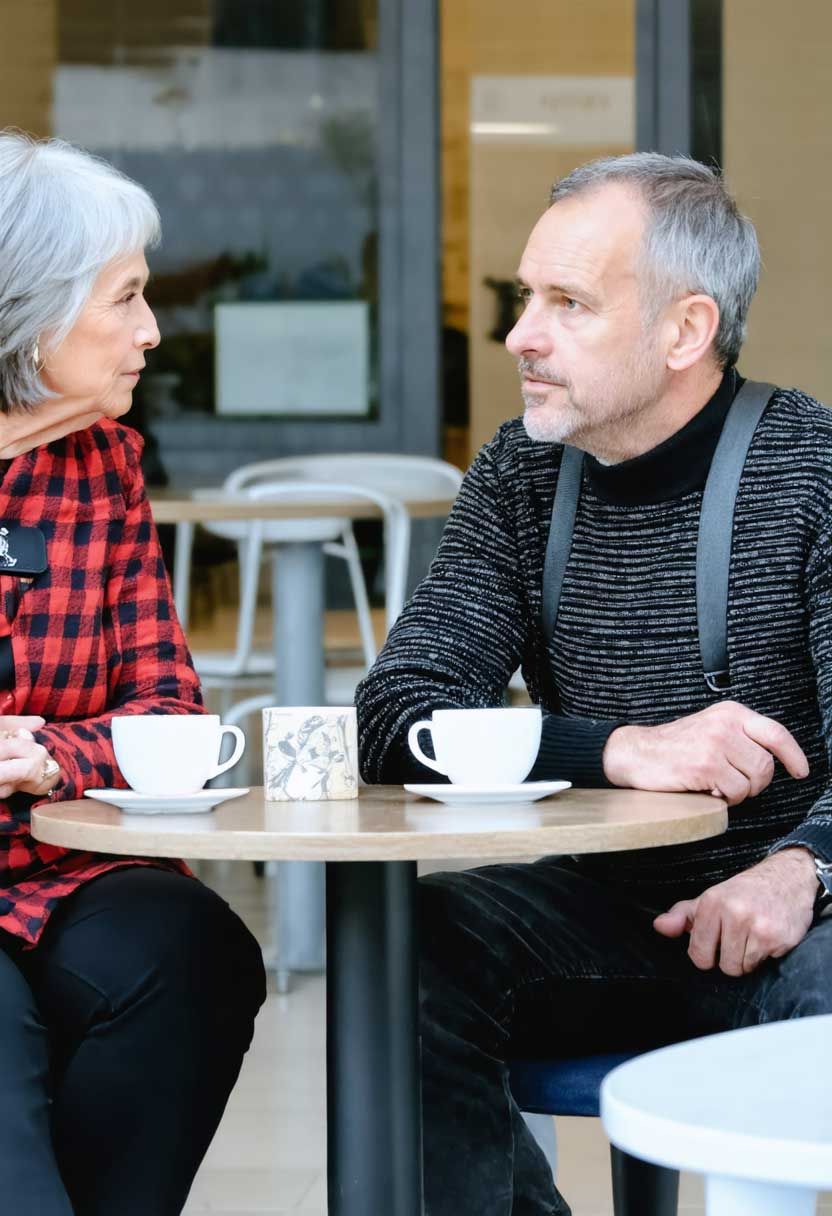
A couple sit at a cafe having a conversation

It wasn't that long ago that people could sit around a dinner table, argue passionately about politics, religion, sport or social issues, and then continue eating together afterwards. The disagreement might have been heated. Voices may have been raised. Nobody necessarily changed their mind.


But the relationship survived.


I have very fond memories of being in Spain and watching the elderly men gather at a local cafe under our window every morning. The conversation was always lively and spirited, but after an hour or so they all hugged their goodbyes and laughing strolled off.


I asked one day what they were talking about and that particular day it was how parenting had changed so much in just one generation. So a complicated subject but one they were having a loud but respectful conversation about.


Today, many people seem to approach disagreement very differently. Conversations that once would have been considered healthy debate are increasingly described as confrontational, toxic or even harmful.


People hesitate before expressing opinions. Managers carefully choose every word of feedback. Friends avoid sensitive topics entirely. Families establish unofficial rules about what can and cannot be discussed at gatherings.


In some ways, this shift makes sense. We have become more aware of bullying, exclusion and the damage that words can cause.


But it also raises an uncomfortable question.


Have we become so focused on avoiding conflict that we've forgotten how to disagree?


The Lost Art Of Disagreeing


Disagreement has always been part of human relationships.


  • Families disagree.
  • Friends disagree.
  • Colleagues disagree.
  • Communities disagree.


In fact, disagreement is often a sign that people care enough to engage with one another. Twenty years ago, many people grew up expecting their ideas to be challenged. Workplace meetings often involved robust debate. Family members could hold wildly different political views and still maintain close relationships. People learned that hearing a different opinion was simply part of participating in society.


That doesn't mean previous generations got everything right. Some conversations were undoubtedly dismissive, insensitive or unnecessarily harsh. But there was often an understanding that disagreeing with someone's opinion was not the same as rejecting them as a person.


Somewhere along the way, that distinction seems to have become less clear.


When Did Discussion Become Confrontation?


One of the most noticeable cultural shifts is how quickly disagreement is now interpreted as conflict.

Questioning an idea can be perceived as questioning someone's intelligence. Offering an alternative perspective can be seen as criticism. Providing feedback can feel like a personal attack. Even asking for clarification can sometimes be interpreted as opposition.


This is particularly noticeable in workplaces. Many managers quietly admit they spend more time than ever worrying about how feedback will be received. Conversations that were once straightforward now require careful planning and delicate language.


The same dynamic appears in friendships, relationships and online discussions.

The challenge may be that we've started treating discomfort and harm as though they are the same thing. They are not.


A difficult conversation can be uncomfortable without being harmful. A disagreement can be challenging without being aggressive. Yet increasingly, many people seem to experience disagreement itself as a form of confrontation.


Has Social Media Changed The Rules?


It is impossible to discuss this topic without acknowledging the role of social media. Most online platforms reward certainty, outrage and emotional reactions. Nuance rarely goes viral.


Thoughtful discussion struggles to compete with strong opinions and dramatic conclusions. When communication happens primarily through screens, something important is lost. We no longer hear tone of voice. We no longer see facial expressions. We no longer benefit from the subtle social cues that help us understand someone's intentions.


As a result, people often assume the worst.


A simple disagreement can quickly become a battle between opposing sides. Over time, this mindset doesn't stay online. It follows us into workplaces, friendships and everyday conversations.


When we're constantly exposed to hostile online debates, it's not surprising that we begin to expect hostility everywhere else.


The Rise Of Identity-Based Opinions


Another significant change is the way opinions have become tied to personal identity. In the past, people were more likely to separate themselves from their beliefs. An idea was something you held.


Today, many ideas have become part of who we are.


Political beliefs, lifestyle choices, parenting approaches, career decisions and social values often become deeply connected to personal identity.


This creates a challenge.


If an opinion feels like part of your identity, disagreement can feel personal even when it isn't intended that way. A discussion about an idea can suddenly feel like a discussion about your worth, your values or your character.


Once that happens, genuine debate becomes much harder. People stop listening and start defending.

The goal shifts from understanding to protecting. Are We Protecting People Or Removing Resilience? Much of this cultural change comes from good intentions.


Society has become more aware of mental health. Workplaces are more conscious of psychological safety. Schools place greater emphasis on inclusion and emotional wellbeing.


These developments have brought genuine benefits. Many people who were once ignored, excluded or mistreated now have greater support and understanding.


But every cultural shift has trade-offs.


If we remove every uncomfortable conversation, do we also remove opportunities to develop resilience?


If we teach people that feeling challenged is inherently negative, do we leave them less prepared for the realities of life?


The world is full of disagreement.


  • Customers disagree.
  • Employers disagree.
  • Partners disagree.
  • Friends disagree.


No amount of social progress will eliminate that reality.


The question is whether we're helping people navigate disagreement or simply teaching them to avoid it?


Why Younger Generations May See Things Differently


It's easy to turn this discussion into a criticism of younger generations, but that would miss the point.

The world they grew up in is fundamentally different.


Many younger adults have spent much of their lives communicating through screens rather than face-to-face conversations. They have been exposed to constant public judgement through social media. They have also received stronger messages about empathy, inclusion and emotional awareness than previous generations.


These are not necessarily bad things. In fact, many older generations could probably benefit from some of that empathy and awareness. At the same time, it is possible that younger people have been taught to identify conflict more quickly and tolerate it less comfortably.


A disagreement that an older worker sees as a healthy discussion may feel confrontational to someone who has grown up in a very different cultural environment. Neither perspective is entirely right or wrong. They are simply products of different experiences.


What Happens When Nobody Challenges Anyone?


The danger of avoiding disagreement is not simply that conversations become boring. The consequences can be much larger.


  • Poor ideas go unchallenged.
  • Workplace problems remain unsolved.
  • Relationships become superficial.
  • Leaders stop leading.
  • Teams become trapped in groupthink.


Some of the strongest relationships are not built on agreement. They are built on trust. Trust allows people to challenge one another without assuming bad intentions. Trust allows difficult conversations to strengthen relationships rather than destroy them.


Without disagreement, we may achieve harmony.


But we rarely achieve growth.


Have We Forgotten The Difference Between Respect And Agreement?


Perhaps the most important distinction of all is the difference between respect and agreement.

Respect does not require agreement.


  • Listening does not require surrendering your opinion.
  • Kindness does not require silence.
  • Someone can disagree with you completely and still respect you.
  • Someone can challenge your ideas while valuing you as a person.


Yet increasingly, these concepts seem to be merging together. If disagreement is interpreted as disrespect, meaningful conversation becomes almost impossible. A healthy society is not one where everyone agrees.


A healthy society is one where people can disagree without assuming they are enemies.


Can We Disagree Without Seeing Enemies?


Perhaps the issue isn't that people disagree more than they used to. Human beings have always disagreed. Perhaps the issue is that we have become less comfortable with disagreement itself.


In trying to create a more considerate and emotionally aware society, we may have unintentionally made honest debate more difficult. That doesn't mean returning to the dismissive attitudes of the past. Nor does it mean ignoring the impact our words can have.


But it might mean rediscovering a simple idea. A disagreement is not automatically a confrontation. A challenge is not automatically an attack. And hearing an opinion you dislike is not the same as being harmed by it.


The question isn't whether disagreement is becoming more common.


The question is whether we've forgotten how to have one.


Join the conversation and have your say over on Medium


Notes From The Sidelines

Share this article

Recent Posts

A man frustrated with bad customer service.
By Notes From The Sidelines June 22, 2026
Has technology improved customer service or simply made it cheaper for businesses? Explore chatbots, self-service systems, offshore support and the value of speaking to a real person.

A smartphone sitting on a kitchen bench
By Notes From The Sidelines June 22, 2026
Smartphones have made life easier, but have they also reduced our curiosity, creativity and willingness to experience the world firsthand?

A young couple inspect an apartment they are hoping to purchase
By Notes From The Sidelines June 22, 2026
Have we made it impossible for our children to be grown up? Or is adulthood entirely different than it was just one generation ago?

An employee and his supervisor chatting in a manufacturing workshop.
By Notes From The Sidelines June 22, 2026
Have workplace protections gone too far, or are employers simply avoiding difficult conversations? We explore the challenges of performance management, accountability and fairness in modern Australian workplaces.

A man and a pregnant woman sitting on a park bench talking.
By Jenny Marsden June 22, 2026
Modern sexual freedom has transformed society, but pregnancy can still change lives forever. Explore the difficult questions around choice, responsibility, child support and reproductive rights.

A woman walking along a riverside path.
By Jenny Marsden June 22, 2026
Healing is supposed to feel like freedom, so why does it sometimes feel like betrayal? Exploring grief, recovery and the guilt that can come with moving forward.

A man sits on a bench by the ocean contemplating his loss.
By Notes From The Sideline June 22, 2026
If grief is the currency of loss, how much do we need to spend? Questioning whether suffering is always necessary to honor the people we love.
An employer frustrated over not being able to get people to just do their jobs.
By Notes From The Sidelines June 22, 2026
Is it getting impossible for employers to just ask people to do their jobs?