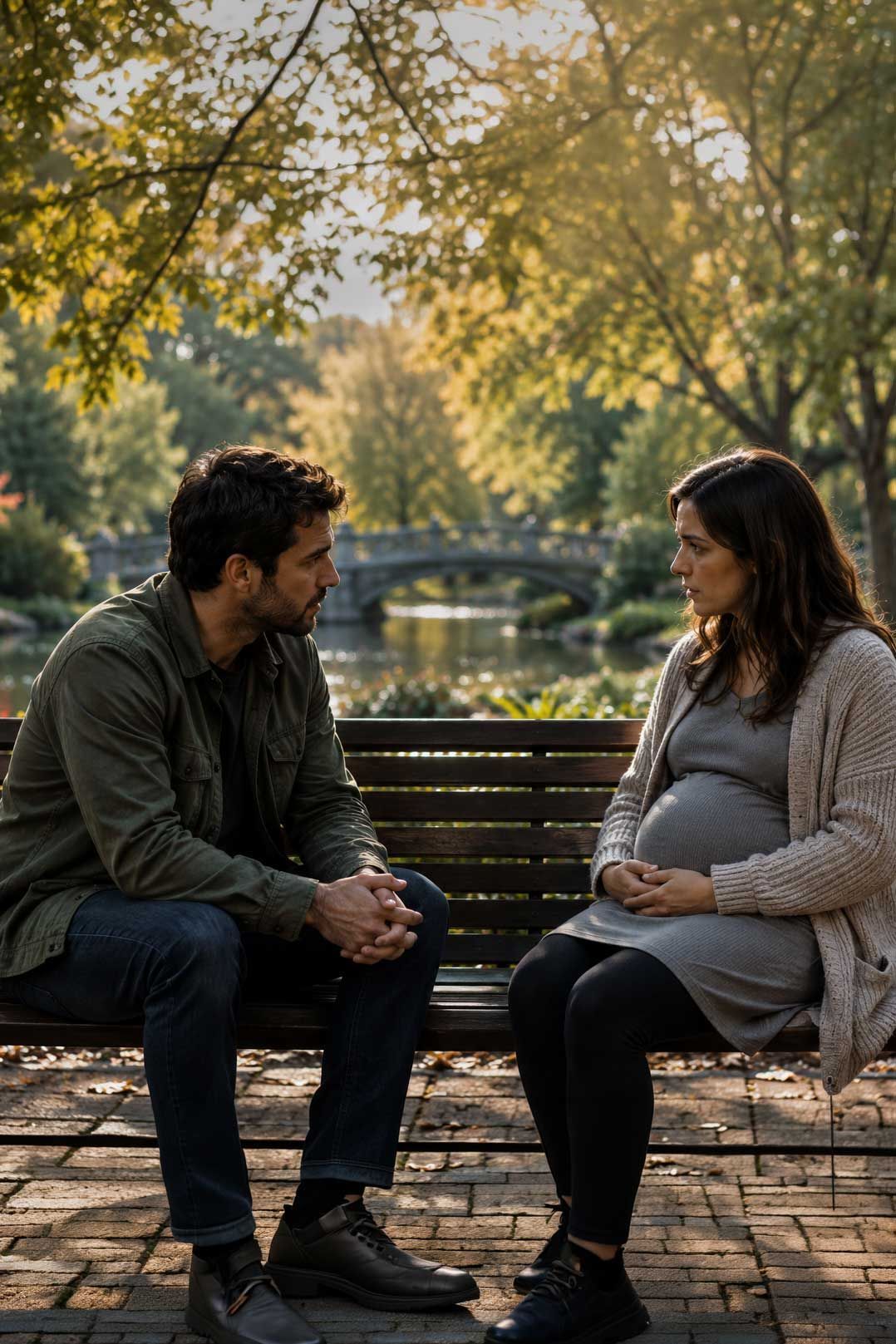



Is Grief the Currency You Have to Spend?
Questioning Whether Suffering Is A Currency We HAVE to Spend

There are few things in modern life that seem beyond challenge.
We question our institutions. We question our workplaces. We question our governments, our traditions and even our own beliefs.
Yet grief sits in a strange category. It is one of the few experiences that appears almost sacred, beyond examination.
We are told that grief must be felt. It must be processed. It must be worked through. We hear phrases like "you can't go around it, you have to go through it" repeated so often they have become accepted wisdom.
And perhaps that wisdom is right.
But I wonder whether there is another question worth asking.What if grief is a currency?
And if it is, how much of it are we actually required to spend?
Because somewhere along the way, we seem to have adopted the idea that the amount of suffering we endure after a loss is directly connected to the amount of love we felt before it.The greater the pain, the greater the love.
The longer the grief, the deeper the connection.
The quicker the recovery, the more suspicious we become.
But is that really true?
The Modern Expectation of Grief
We live in a culture with surprisingly rigid expectations around grief. If someone loses a spouse, a parent, a child or even a beloved pet, there is often an unspoken script.
They should be devastated.
They should struggle.
They should take time.
They should carry visible signs of their loss.
And if they don't? People become uncomfortable.Questions arise.
- "Were they in shock?"
- "Have they processed it yet?"
- "Are they just bottling it up?"
The assumption is almost always that a person who appears to be coping must simply be delaying their grief.
The possibility that they may genuinely be coping rarely enters the conversation.
The person crying daily is understood, BUT The person who returns to work after a week is questioned.
The person who can't function is given sympathy, BUT The person who adapts is often given suspicion.
It is as though grief must be displayed to be believed.
In many ways, we've created a hierarchy where visible suffering is seen as more authentic than quiet acceptance.
-
Why We Measure Love Through Pain
Perhaps this comes from a simple human instinct. Pain feels meaningful.
We instinctively believe that things which matter should hurt when they are gone. The problem is that we often take that idea one step further. We begin to believe that ongoing pain is proof of ongoing love.
Imagine two people who lose someone they deeply care about.
One remains overwhelmed for years.
The other feels immense sadness, gradually accepts the loss and finds peace.
Who loved more?
Most of us would say neither.
Yet when faced with these situations in real life, we often treat the first person's grief as somehow more valid. As though suffering itself has become evidence. But perhaps love and grief are not as closely linked as we assume.
Maybe grief is a response to loss & love is something else entirely? Love existed before the loss and can continue long after the pain has faded.
Different People, Different Responses
One of the strangest contradictions in modern thinking is that we accept individual differences in almost every area of life except grief. We accept that people have different personalities, different coping mechanisms, different emotional styles & different ways of expressing affection.
Yet when it comes to grief, we often expect remarkably similar outcomes.
- Some people cry.
- Some people become practical.
- Some throw themselves into work.
- Some seek company.
- Some seek solitude.
- Some feel shattered.
- Some feel relief after watching a loved one suffer through illness.
- Some move forward quickly.
- Some never do.
None of these responses automatically indicate the depth of the relationship that came before.
They simply reflect the complexity of being human.And perhaps that's where our understanding should begin. Not with expectations, but with acceptance.
An Assumption I've Made Myself That Proved To be VERY Wrong
About 10 years ago my nephew got married. He had been with his fiancé since they were year 11 at school. I loved her, that wasn't the problem. I was totally freaked out that here he was making a lifelong commitment to the only person he had ever made any romantic commitment to. I just didn't think it was the smartest idea.
I was scared for him. I couldn't understand how he could know that she was the one he wanted to be with forever when she was the only one he had ever been with. We made decisions in our lives based around choices right? If you've never had caviar how do you know if you like it or not?
Of course this was my fear and not based around his decisions, but the interesting thing was that I was happy to talk to him about it. There was no real 'taboo' surrounding the discussion and we very openly had a conversation around it.
Then last year a close friend lost her daughter to suicide.
And unbelievably I again made an assumption. I thought she wasn't dealing with it at all. I though the way she was grieving was wildly unhealthy and I was very concerned about her wellbeing. However, I just didn't think that it was appropriate for me to talk to her about how she was grieving her 18 year old daughter.
So I didn't talk to her. It was maybe 5 or 6 weeks before I bought up the subject. And her firs words were "I just had to get through the funeral and make sure my husband and other children were OK".
Didn't I feel like an ahole!
I felt horribly judgemental and almost ashamed of myself for questioning her grieving process. She had every right to process it exactly as she did, but I felt concerned because I couldn't see that.
I thought she was saving her grief in a piggy bank for later and that it would all come crashing down because she was wasn't spending that money now!
What I realised was, who cares if she was - its HER grief and she can spend it anyway she wants. It's my job to be there, no more and no less.
The Debt We Think We Owe
I sometimes wonder whether many people are grieving the loss itself or grieving what they believe they owe the loss.
There is often an invisible sense of obligation attached to grief.
A feeling that moving forward too quickly would somehow be disrespectful.
That laughter is inappropriate.
That happiness is disloyal.
That peace is premature.
A widow enjoys a holiday and feels guilty.
A son laughs at a family barbecue six months after a funeral and suddenly wonders if he's forgotten his father.
A friend begins enjoying life again and questions whether they're betraying someone's memory.
These moments reveal something fascinating. The guilt isn't usually about the person who died. It's about the story we've created around grief. The belief that continued suffering somehow honours the relationship.
But does it?
Or have we simply confused remembrance with pain?
When Grief Becomes an Identity
There is another uncomfortable possibility worth considering. Sometimes grief can become part of who we are.
This isn't a criticism. It's understandable. Loss changes us. Major losses divide life into before and after. But there can come a point where grief stops being something we experience and starts becoming something we inhabit.
The grieving spouse.
The grieving parent.
The grieving child.
The grieving friend.
These identities can provide meaning, structure and even connection with others. Leaving them behind can feel frightening. Because if we stop defining ourselves through the loss, what comes next?
Perhaps this is one reason some people struggle to move forward even when they desperately want to.
Not because they have forgotten. But because they no longer know who they are without the grief.
What If Some People Don't Need to Suffer for Years?
This is probably the most controversial question of all. What if some people genuinely don't need years of grief?
Not because they are cold.
Not because they are avoiding reality.
Not because they didn't care.
Simply because they have accepted what happened. Modern discussions often assume that resilience is denial wearing a disguise. But maybe resilience is exactly what it appears to be.
The ability to absorb something terrible and continue living.
The ability to carry loss without being crushed by it.
The ability to remember without constantly hurting.
Not everyone arrives there. Not everyone should be expected to. But neither should we assume that anyone who reaches acceptance quickly has somehow done grief incorrectly.
What If Love Doesn't Require Ongoing Pain?
Perhaps the deepest assumption we hold about grief is that love and suffering are permanently linked. That to stop hurting is to stop caring. But when we think about it carefully, that doesn't make much sense. The people we love influence us in countless ways.
They shape our memories.
Our habits.
Our values.
Our stories.
None of that disappears when the pain fades. A person can remember a parent every day without crying. A widow can smile at old photographs. A friend can tell stories and laugh about someone who has passed away.
The love remains.
Only the suffering changes.
And maybe that's exactly how it should be. Maybe the goal was never to carry the pain forever. Maybe the goal was to carry the person forward in a different form.
So How Much Grief Is Enough?
I don't know the answer. I don't think anyone does.
Grief is deeply personal and impossibly complex. Some losses leave scars that never fully heal. Others settle quietly into the background of our lives. Both experiences are real. Both deserve respect.
But perhaps we should be cautious about treating suffering as a moral obligation. Perhaps we should stop assuming that more pain means more love. And perhaps we should stop measuring people's grief by how visibly they spend it.
If grief is a currency, maybe the real question isn't whether we have to spend it.
Maybe the question is how we know when the debt has been paid.
And whether, sometimes, we've continued paying long after we needed to.
Join the conversation and have your say over on Medium